

The Hidden Brain Systems That Shape Your Becoming!
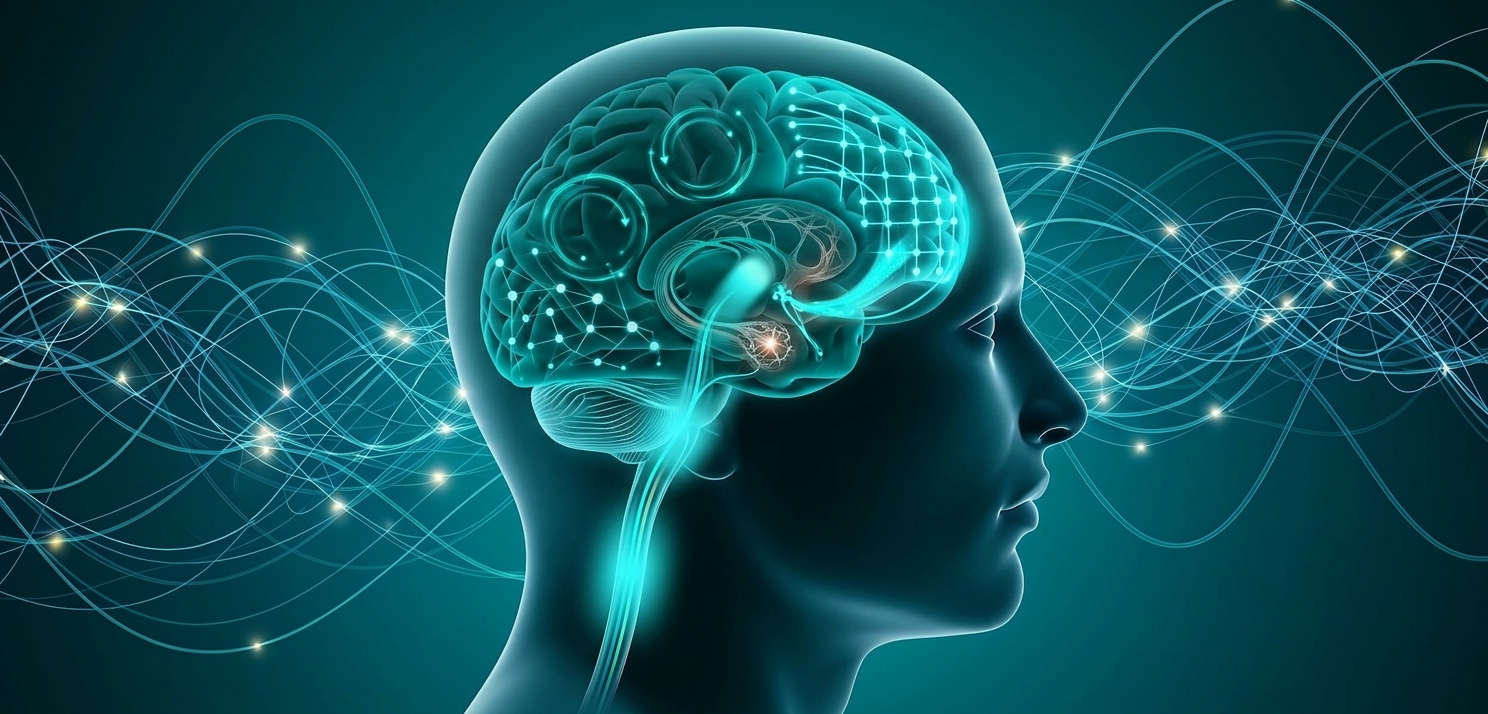
Every transformation begins long before a conscious decision is made. Long before you say, “I want to change,” your brain has already launched a silent cascade of biological events preparing you to think differently, feel differently, and ultimately live differently. To understand genuine human change, you must first understand the brain’s deep architecture — not as isolated regions acting independently, but as a coherent sequence through which every experience is sensed, filtered, interpreted, and translated into behavior. What follows is a brief and precise exploration of this true neurobiological sequence of our brain systems, revealing how your brain continuously shapes your inner world and the life you create.
1. Brainstem Arousal & Autonomic State:
The State Your Body Is In → Your First Reality Filter
Human experience begins not in thought but in physiology. The first system to shape any life change is the brainstem and autonomic networks, the ancient circuitry responsible for arousal, safety, and survival. Stephen Porges’ Polyvagal Theory (2011) demonstrated that the autonomic state — whether the body is settled in safety or mobilized in threat — determines the lens through which the entire world is perceived. Before the cortex interprets a single idea, the body has already voted. A calm autonomic state opens access to curiosity, reflection, and higher reasoning, while a defensive state shrinks the field of possibility. In this sense, every transformation begins with regulating the “platform” on which experience is built: your physiological baseline.
Real Situation: Imagine you walk into a performance review already stressed from traffic. Your heart rate is elevated and shoulders tense. Minutes later, a neutral comment from your manager feels like criticism. Nothing in the words changed — only the autonomic state did. The body voted first, and the mind followed.
You should be coached to check your physiological baseline before important decisions or conversations.
2. Thalamic Sensory Relay:
What You Perceive → The Gateway of Reality
Once the body establishes its level of arousal, sensory reality enters through the thalamus, the central gateway of perception. The thalamus operates as the brain’s receptionist, receiving signals from the external world and forwarding them both upward to cortical regions and sideways to emotional circuits. Research by Joseph LeDoux (1996) showed that the thalamus can send crude but rapid sensory information directly to the amygdala before full conscious processing occurs. This means your brain is already assigning potential significance to events even before you “know” what is happening. The world arrives first as a sensation — a flash of sound, color, or movement — and only later as meaning.
Real Situation: Imagine walking alone at night when a sudden noise erupts behind you. Before you even identify the source, your body has already jumped into alert mode — heart rate spikes, muscles tense, and senses sharpen. The thalamus, acting as a rapid relay station, sends the signal straight to the brain’s emotional circuits, priming you for action “just in case.” In moments like this, your brain prioritizes speed over accuracy, ensuring you can respond to potential threats even before conscious awareness catches up.
Use grounding before cognitive reframing to ensure the sensory system is not in threat mode.
3. Reticular Activating System + Salience Network:
What You Notice → The Attention Gate
But perception is never neutral. The next stage in the sequence — the Reticular Activating System (RAS) and the Salience Network — determines what becomes the focus of consciousness. The RAS regulates alertness and determines which stimuli rise into awareness, while the Salience Network, described extensively by Menon (2011), selects information based on relevance, novelty, or emotional importance. It does not simply show you the world; it shows you what matters to you. This explains why your name stands out in a noisy crowd or why your mind immediately highlights threats when you are stressed. The brain does not perceive everything — it perceives selectively, guided by internal priorities and past experiences.
Real Situation: A mother in a crowded airport instantly hears her child cry because her RAS is tuned to anything related to safety and attachment — it amplifies what matters most in that moment. A stressed entrepreneur, on the other hand, walks into a room full of potential yet sees only risks because the Salience Network is scanning for threats, not opportunities. Both cases reveal the same principle: the brain doesn’t show us everything — it highlights what matches our internal state.
Before a meeting or goal-setting session, prime the brain to look for solutions rather than threats.
4. Affective Limbic Circuits:
How You Feel Events → Emotional Tagging
Emotional meaning emerges next through the affective limbic circuits, most notably the Amygdala, Hippocampus, and Anterior Cingulate Cortex (ACC). These structures tag sensory input with emotional valence, assigning tones of threat, reward, familiarity, or uncertainty. LeDoux’s work (1996) revealed the speed and power of this system: emotions arise before conscious interpretation, shaping perception at its earliest stages. The hippocampus, involved in contextual memory, blends incoming information with prior experiences, generating emotional coloring that will heavily influence the meaning your brain constructs. Every life event is therefore first felt before it is understood.
Real Situation: Imagine sitting in a team meeting when a colleague raises his voice slightly. Instantly, you feel fear or defensiveness, even though the comment isn’t directed at you personally. Your mind flashes back to past experiences of harsh criticism — perhaps a manager’s sharp words or a critical teacher — and your body reacts as if danger is present in the moment. This happens because the amygdala responds to familiar patterns, not to the actual meaning of the present situation.
Teach clients to pause and name what they feel before reacting.
5. Memory Systems:
What You Remember → How Your Past Shapes the Present
Memory systems further shape this early interpretation. Research by Larry Squire (1992) showed that memory is not a collection of stored files but a dynamic reconstruction process, constantly comparing the present with the past. As new input arrives, hippocampal and cortical networks search for patterns and similarities. The brain is essentially predicting: “Have I seen this before? What does this usually lead to?” This predictive nature is crucial for survival but deeply influences behavior. Your present experience is always filtered through the accumulated memory of your past, which is why change often feels like rewriting internal templates rather than simply learning new habits.
Real Situation: A new boss offers feedback. One interprets it as an opportunity for growth, drawing on past experiences with supportive mentors. The other perceives it as a threat, triggered by memories of harsh criticism. The situation itself is identical, yet the meaning each person constructs — shaped by prior experiences stored in memory — completely alters their emotional response and subsequent behavior.
Revisit old narratives and rewrite the emotional tone through guided reflection.
6. Prefrontal Cortex (PFC):
How You Interpret Events → The Architect of Meaning
The prefrontal cortex (PFC) enters next, bringing logic, reflection, and the capacity for deliberate understanding. This region — often described as the brain’s executive — constructs interpretations, evaluates options, and engages in cognitive reappraisal. Ochsner and Gross (2005) demonstrated that the PFC can regulate emotional responses by altering the meaning assigned to events, even modifying amygdala activity. This means that the stories you tell yourself have biological power. When the PFC is active and well-regulated, it shapes perception with clarity, enabling you to respond intentionally rather than react impulsively.
Real Situation: Imagine yourself opening a rejection email. At first, disappointment floods in — chest tightens, shoulders slump, stomach knots. After a brief pause, the prefrontal cortex reframes the situation: “This is redirection, not failure.” Instantly, the emotional response shifts from collapse to motivation, turning discouragement into clarity and renewed drive.
Guide clients to reinterpret setbacks through purposeful meaning-making.
7. Default Mode Network (DMN):
How You Narrate Events → The Story You Tell Yourself
Once interpretation forms, the Default Mode Network (DMN) weaves it into the personal narrative. Marcus Raichle’s research (Raichle et al., 2001) revealed the DMN as the system responsible for self-referential thinking: linking experiences to identity, constructing a sense of past and future, and integrating events into the ongoing story of “who I am.” Here, meaning becomes autobiographical. A single situation can be interpreted as evidence of growth or failure depending entirely on the narrative loops of this network. Transformation, therefore, requires not only new behaviors but new identities — a reorganization of the stories through which you define yourself.
Real Situation: Two people miss the same project deadline, yet their inner narratives lead them in completely different directions. One tells himself, “This proves I’m not capable,” and immediately sinks into self-doubt and withdrawal. The other thinks, “This is feedback for improving my workflow,” and shifts into problem-solving and growth. The event is identical, but the story the Default Mode Network (DMN) constructs shapes two entirely different emotional paths — and ultimately, two very different life trajectories.
Help clients author a more empowering identity script.
8. Dopaminergic Reward System :
What Motivates You → The Drive Behind Behavior
After narrative construction, the brain evaluates the motivational value of possible actions through the dopaminergic reward system, primarily involving the Ventral Tegmental Area (VTA), Nucleus Accumbens, and Basal Ganglia. Wolfram Schultz’s pioneering work (1997; updated in a major review in 2016) demonstrated that dopamine is not about pleasure but about anticipation and pursuit. The brain generates motivation when it predicts a rewarding outcome, not merely when a reward is received. This system determines whether a goal feels energizing or pointless, whether an action is worth the effort, and whether a new behavior becomes a habit. Life change depends strongly on how this system interprets value.
Real Situation: You may want to exercise but feel little motivation to start. By linking workouts to a meaningful long-term reward — such as increased energy, confidence, or vitality — the brain’s dopamine prediction system activates. Suddenly, the action shifts from a chore to something engaging, as anticipated reward energizes behavior and makes the effort feel worthwhile.
Break goals into tiny steps with built-in wins.
9. Central Executive Network (CEN):
How You Act → The System That Turns Intention Into Reality
Convert motivation into concrete, scheduled behaviors.
Final Insight:
- Understanding this neurobiological sequence of our brain systems reveals a profound truth: your life is not shaped by a single region of your brain but by a coordinated flow — from physiological state (Body) to sensory filtering (Perception), emotional tagging (Emotion), memory prediction (Memory), meaning construction (Interpretation), narrative formation (Story), motivational valuation (Motivation), and finally conscious action (Action).
- Transformation is the cumulative result of this entire journey. When you learn to influence even one step consciously — through regulation, reframing, identity work, behavioral reinforcement, or focused action — every step that follows begins to shift in your favor.
- Change, then, is not an act of force. It is an alignment of our brain systems. It is learning to cooperate with the deep biological architecture of your mind, guiding it toward clarity, purpose, and growth. When you understand your brain’s sequence, you no longer wait for transformation. You participate in it, shape it, and become the conscious author of the life your brain is continuously constructing with you.